
One of the most important concepts when designing reliable quantum computers at scale is the fault tolerance threshold. This is the point at which a quantum system can correct errors faster than they occur!
Fault tolerance threshold
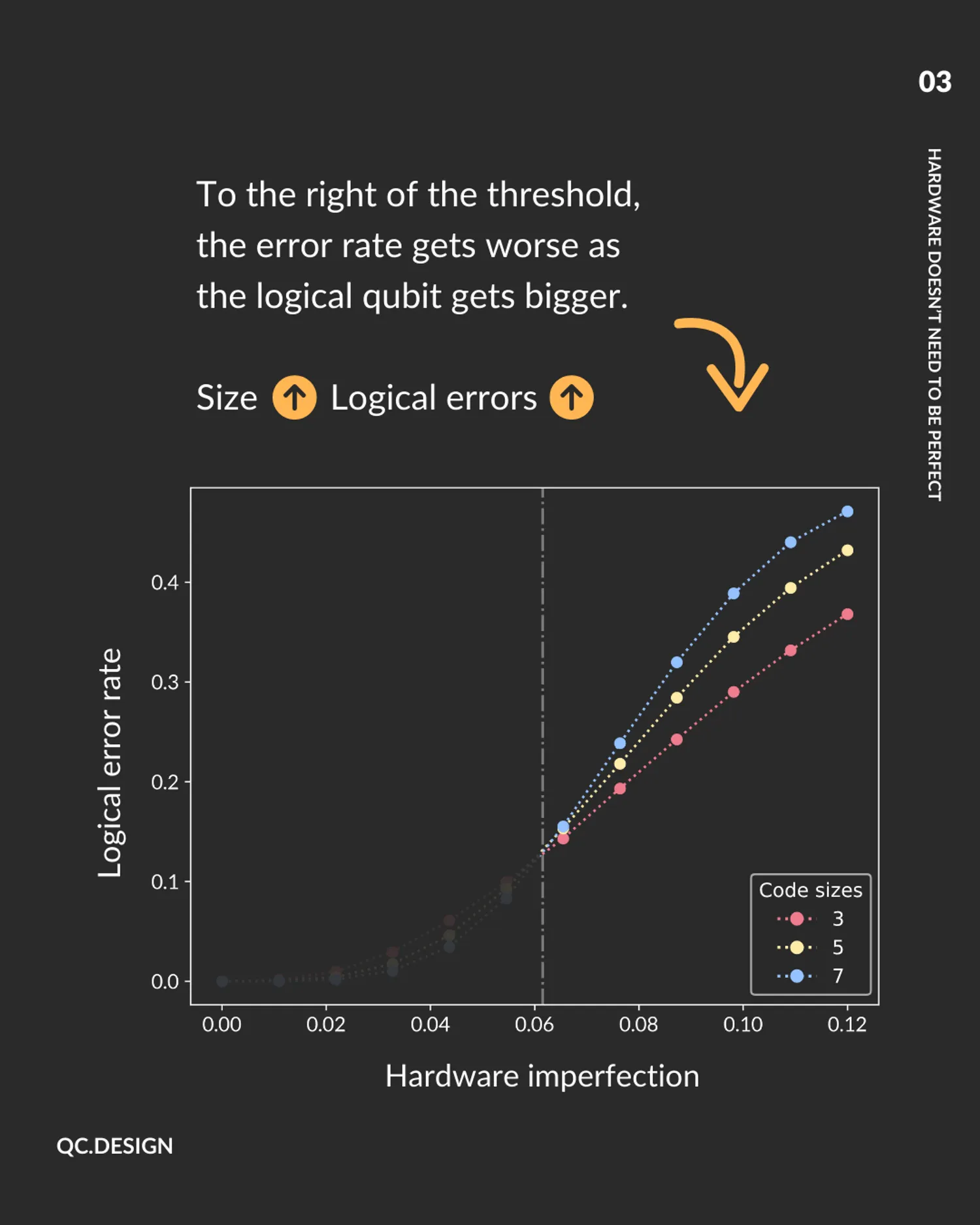
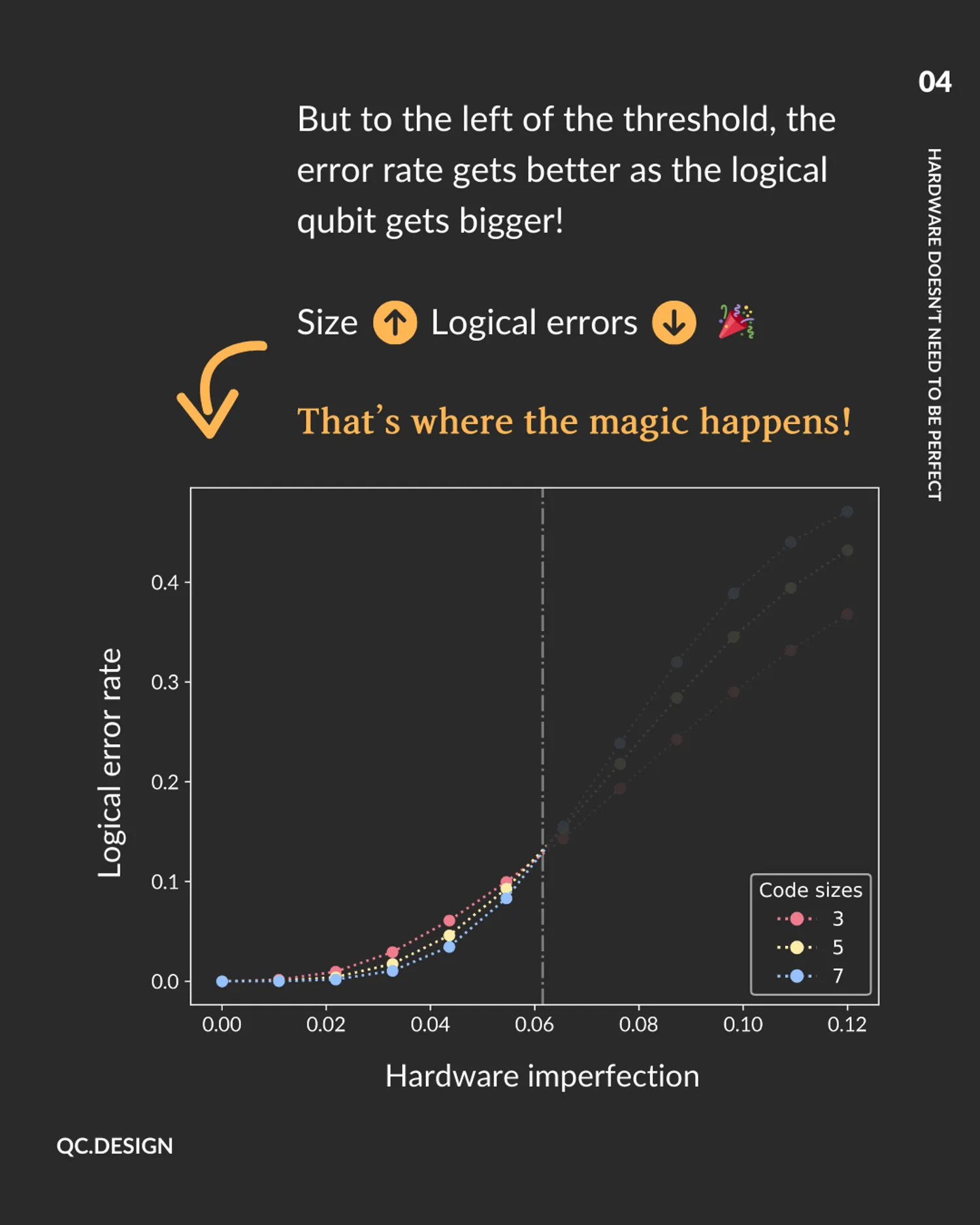
The threshold can be identified from the threshold plot. It’s the point at which the logical errors for different sized logical qubits cross each other. The arrow below points to the threshold, where the curves for logical qubits of code-sizes 3, 5, and 7 meet.
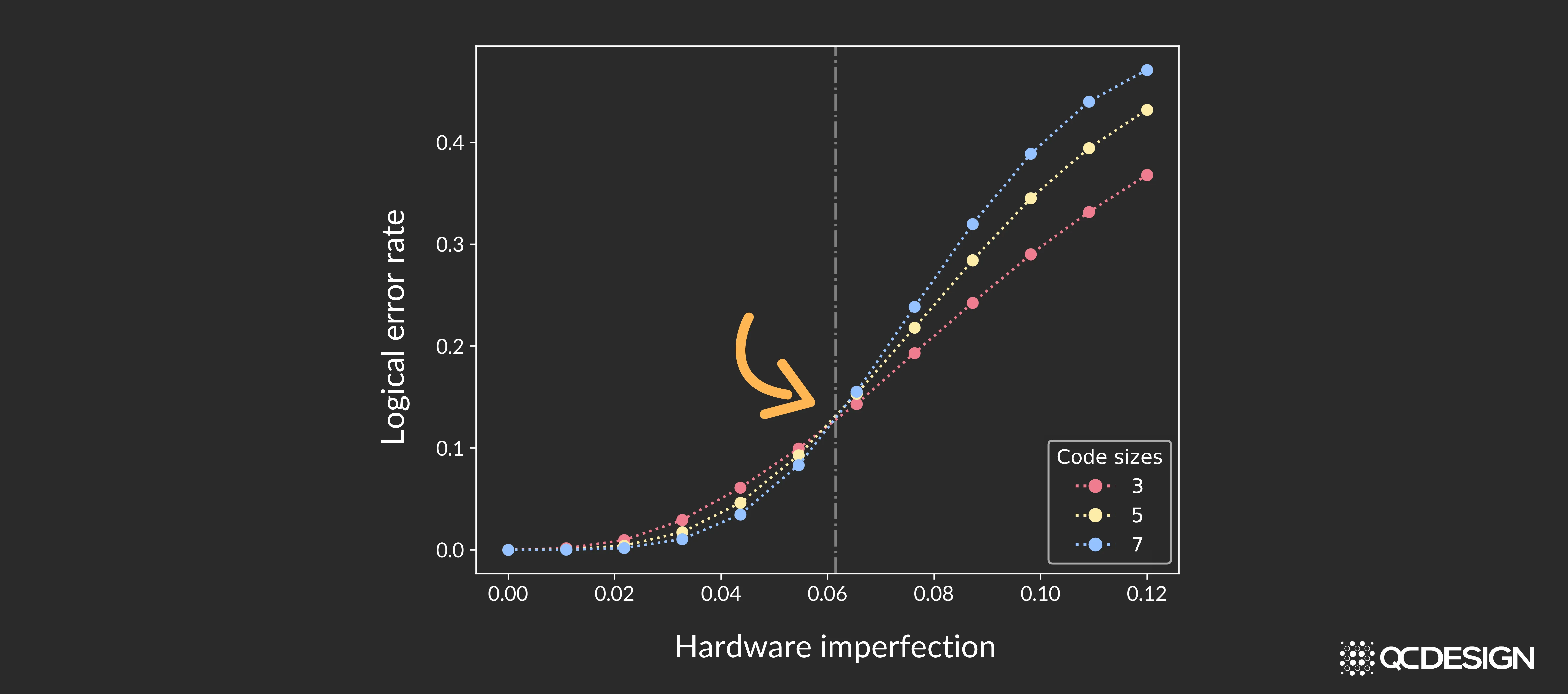
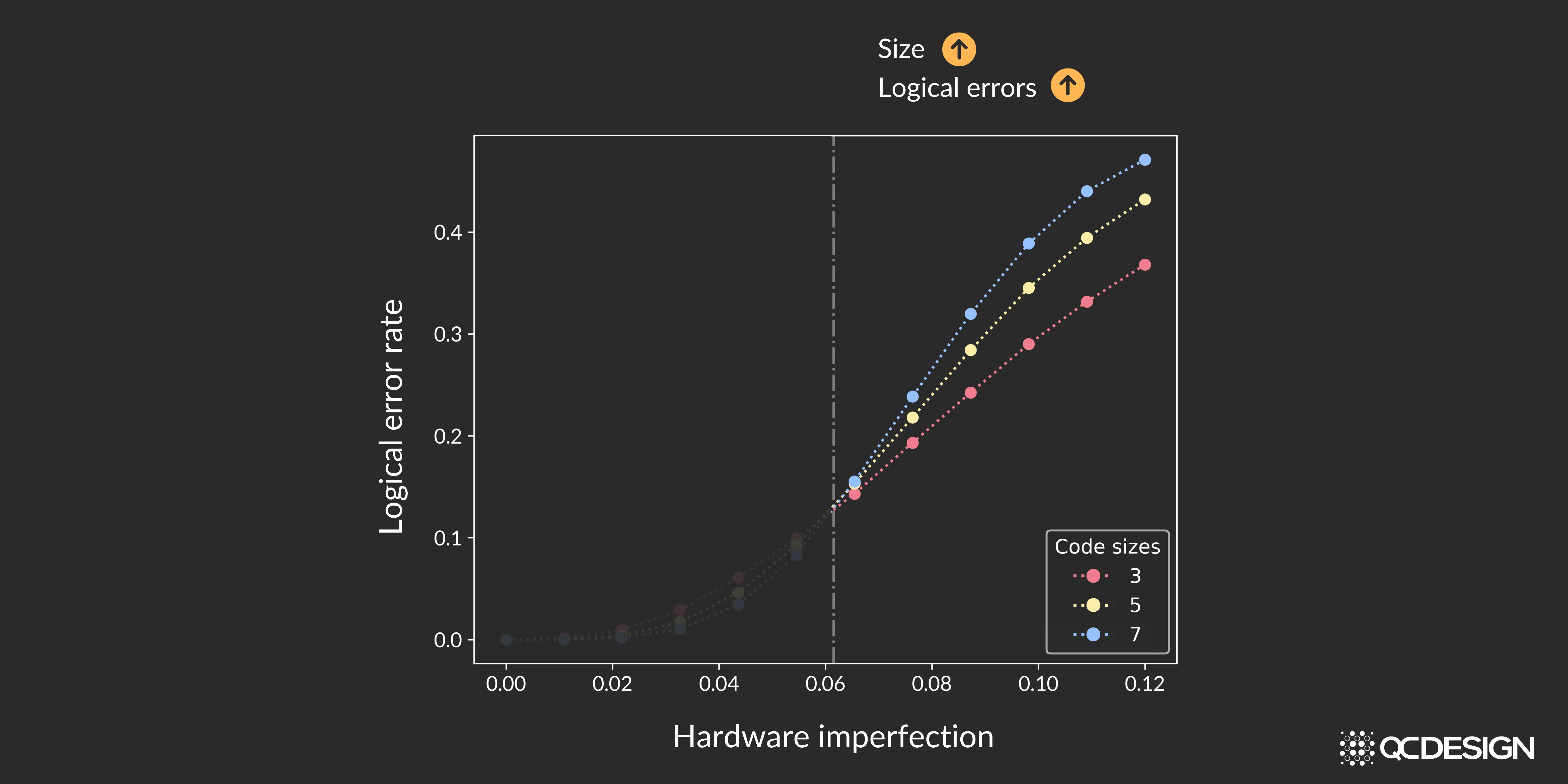
To the right of the threshold, the error rate gets worse as the logical qubit gets bigger.
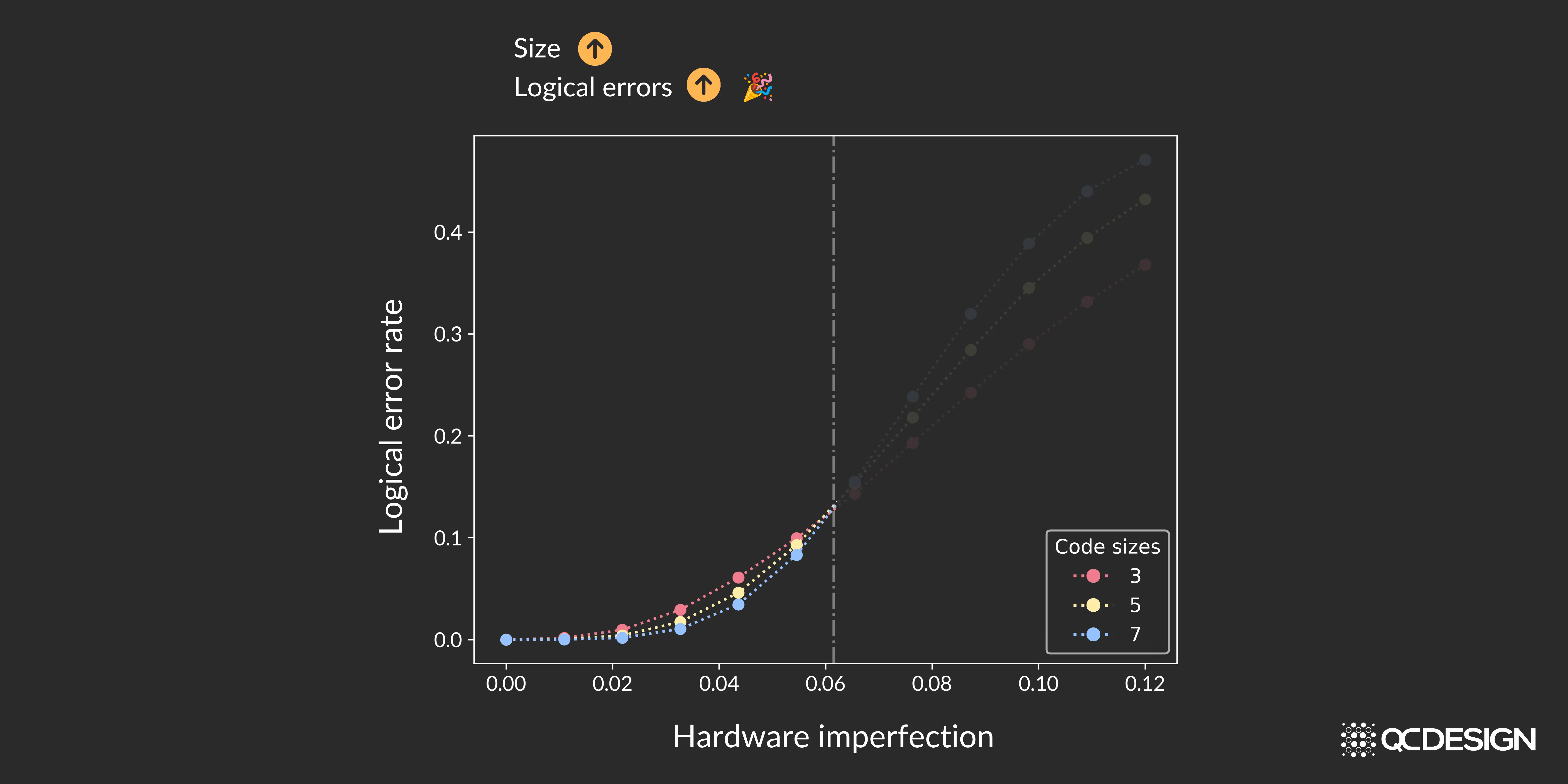
But to the left of the threshold, the error rate gets better as the logical qubit gets bigger!
That’s where the magic happens!
Hardware imperfections
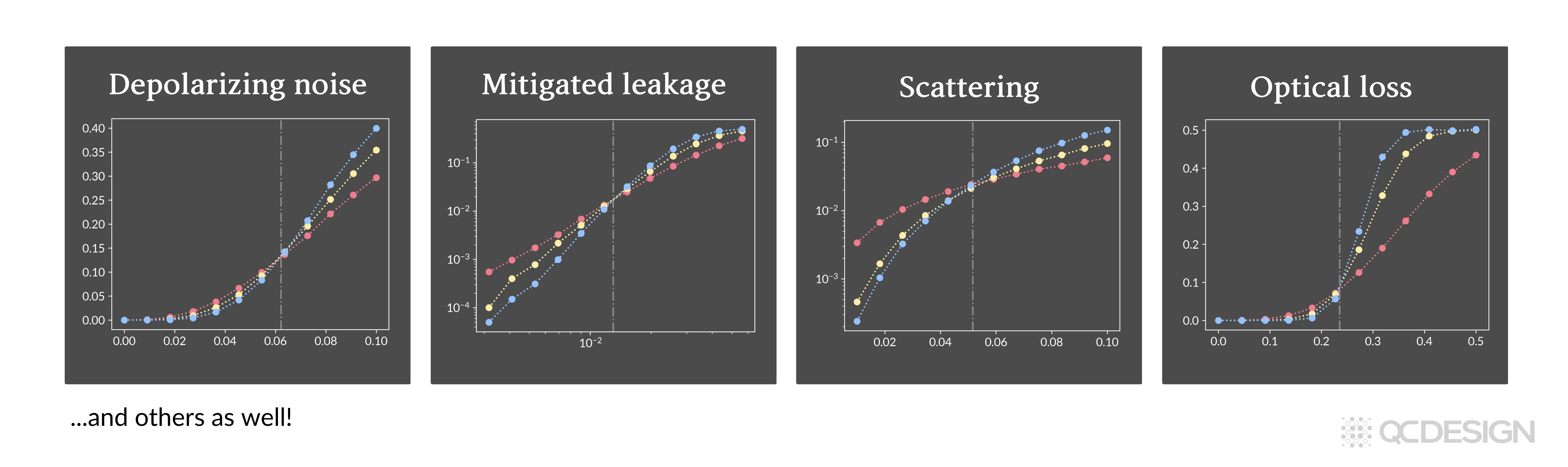
But here’s the tricky part. Hardware imperfections come in a variety of forms:
- Depolarizing noise
- Leakage in superconducting qubits
- Scattering in neutral atoms
- Optical loss for photonic qubits
- …and many, many more!
And we need to understand them all.
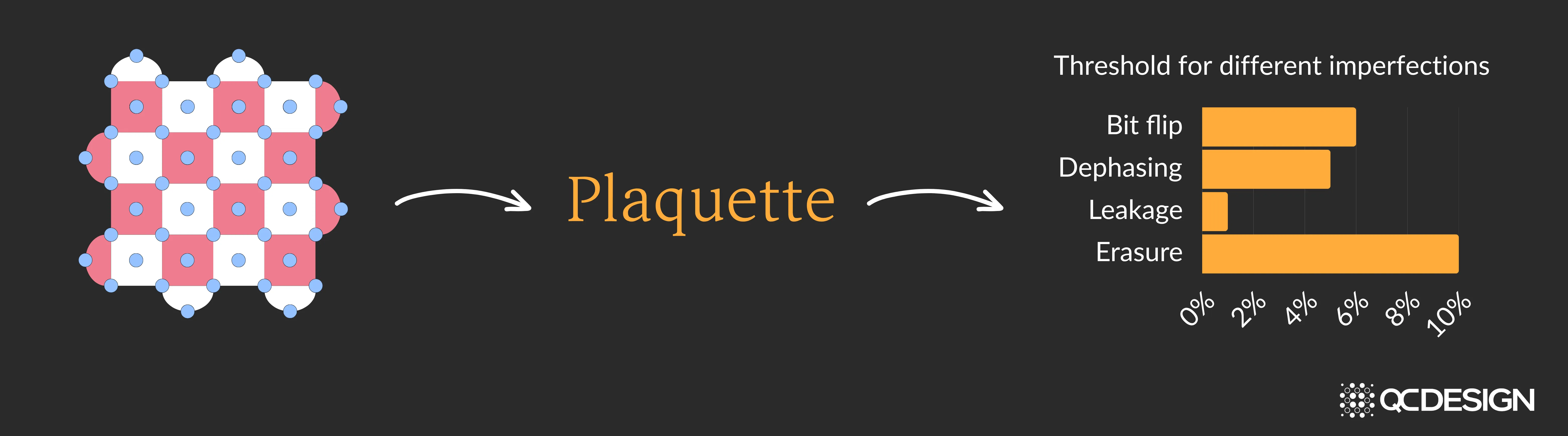
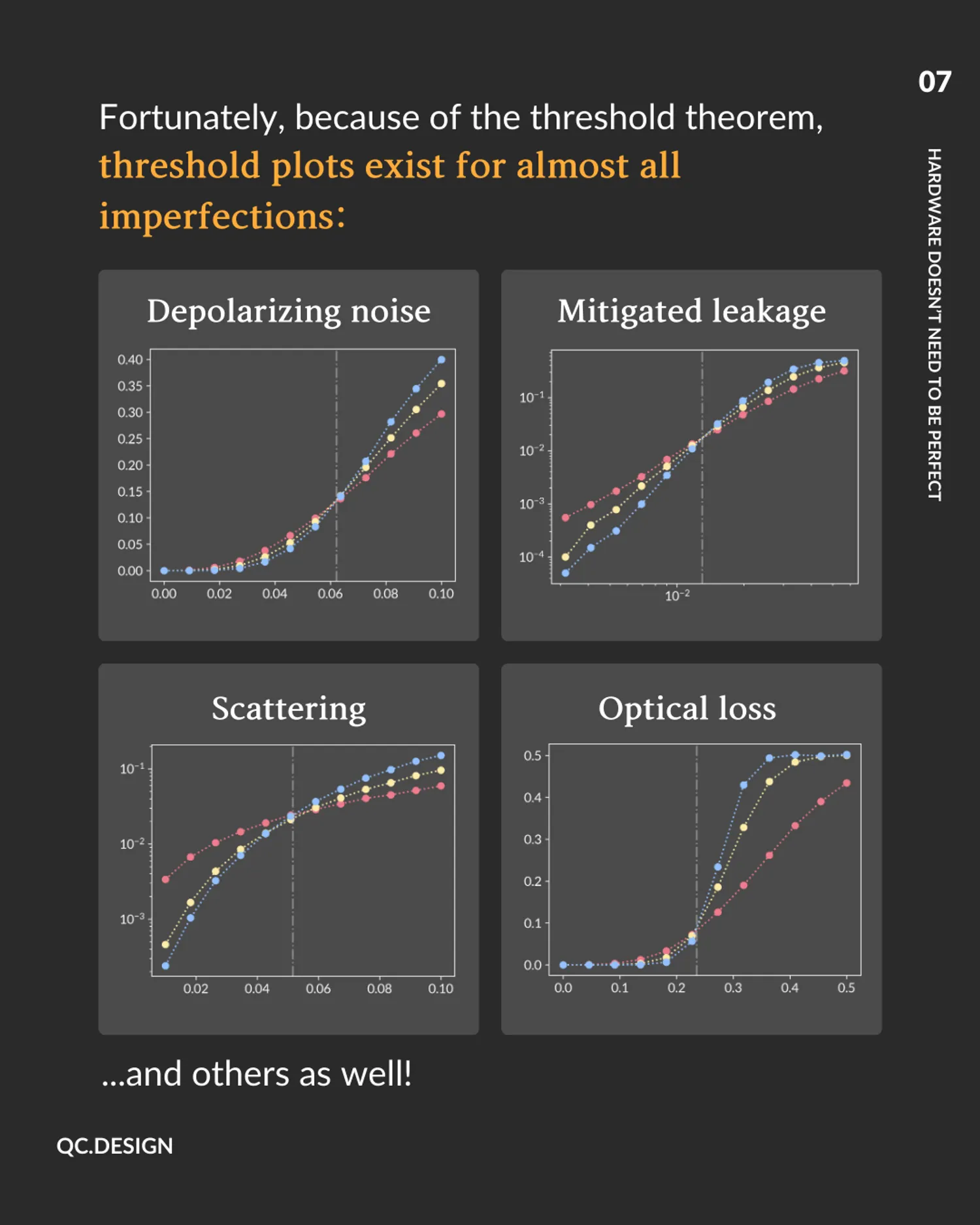
Each imperfection type sets a different threshold, and some are harder to handle than others. Leakage, for instance, has no threshold at all unless it’s actively mitigated.
Fortunately, because of the threshold theorem, threshold plots exist for almost all imperfections:
To produce reliable and useful quantum computers, hardware teams need to design and build systems below the fault tolerance threshold for all hardware imperfections.
But calculating fault-tolerance thresholds across various hardware imperfections is really, really hard! Each imperfection type needs its own simulation, and real hardware typically has several interacting at once.
How Plaquette helps
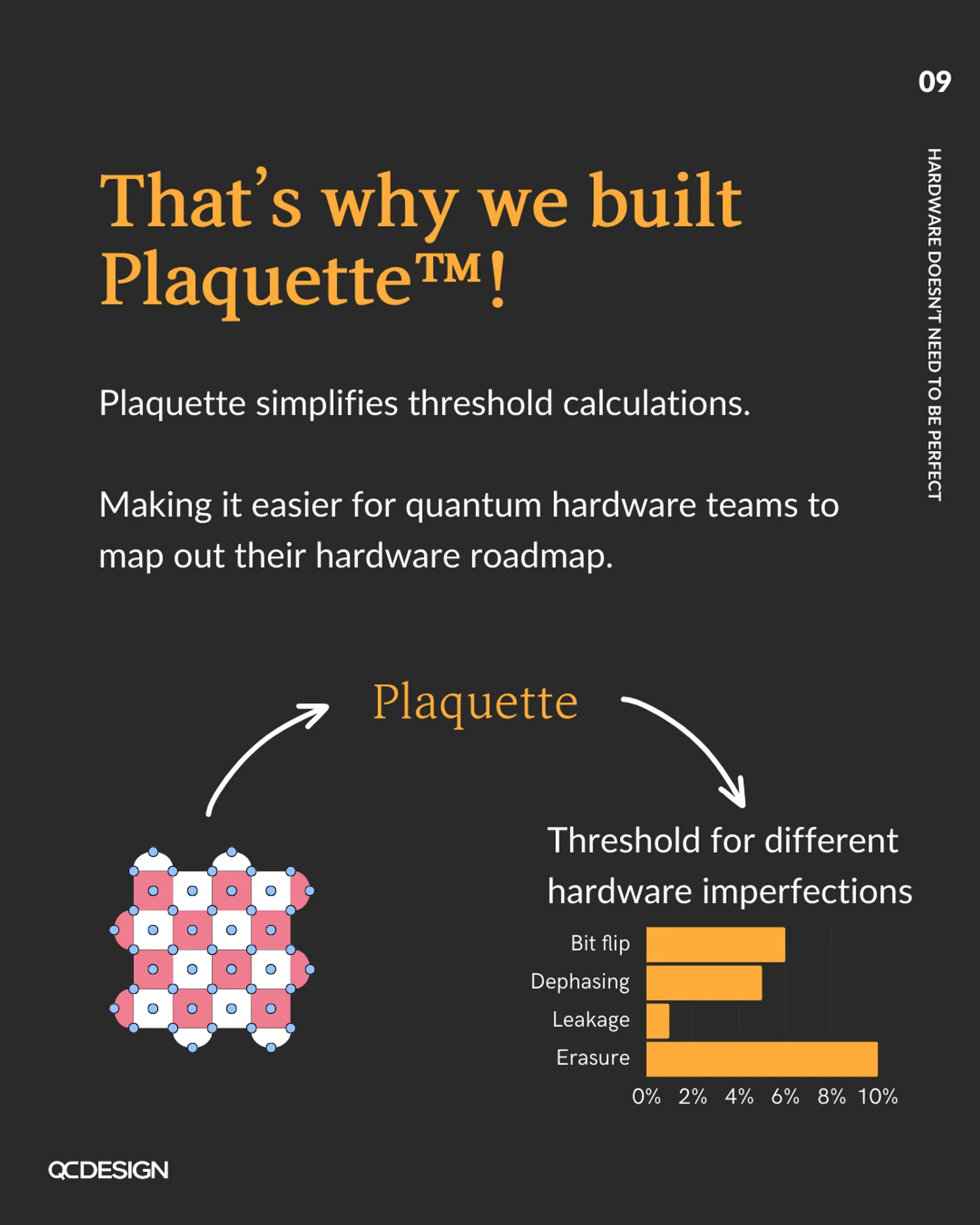
Plaquette simplifies threshold calculations, making it easier for quantum hardware teams to map out their hardware roadmap.
If you’re curious how Plaquette can work for your platform, get in touch and we can share a demo.
Not ready yet? You can also join our practitioners mailing list to be notified when we release new features or publish technical content like this.



This post was originally published in January 2025 and updated in August 2026.