Modeling realistic noise in quantum error correction simulations is notoriously difficult. At QC Design, we are expanding the boundaries by enabling precise modeling of errors due to shuttling.
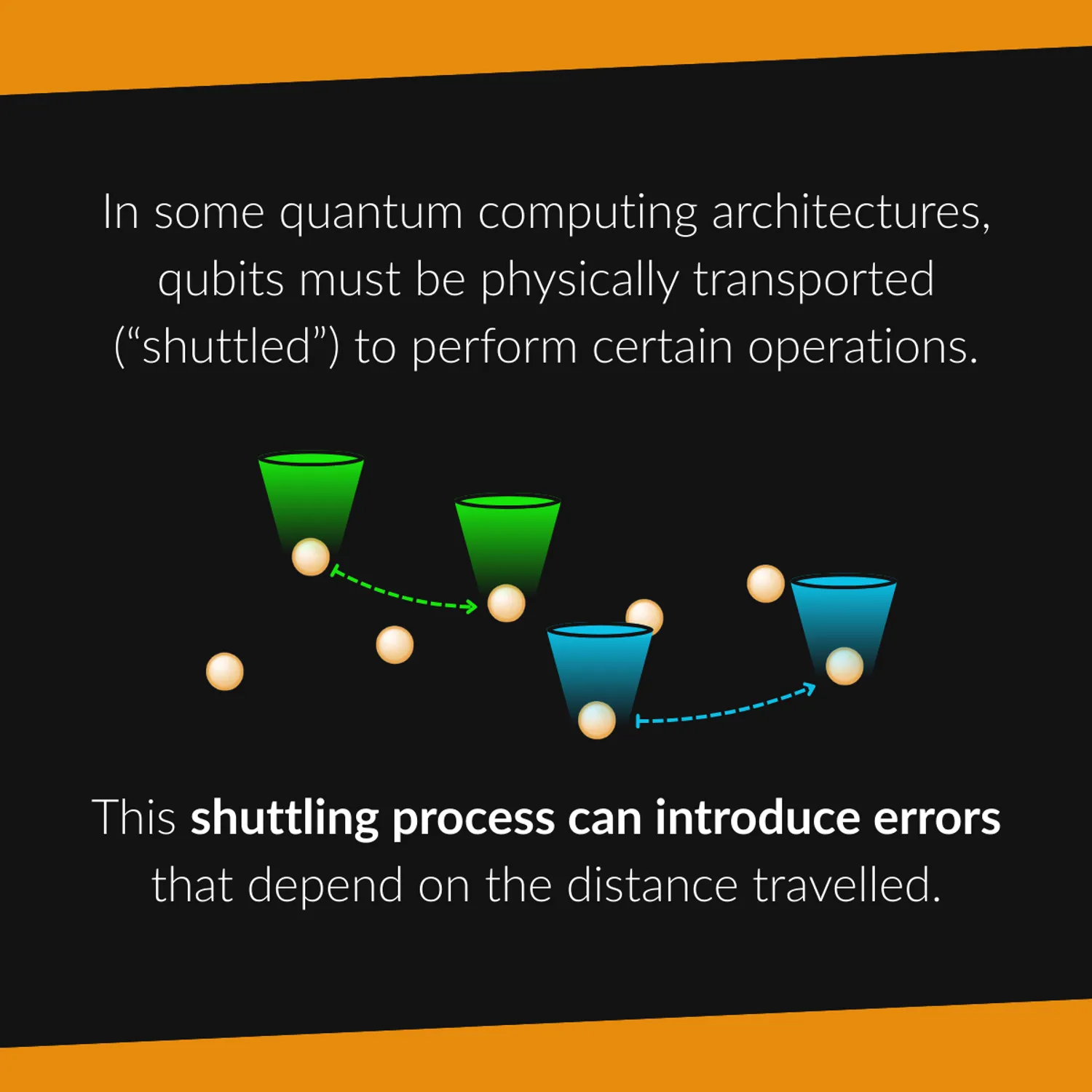
In some quantum computing architectures, qubits must be physically transported (“shuttled”) to perform certain operations. This shuttling process can introduce distance-dependent errors.
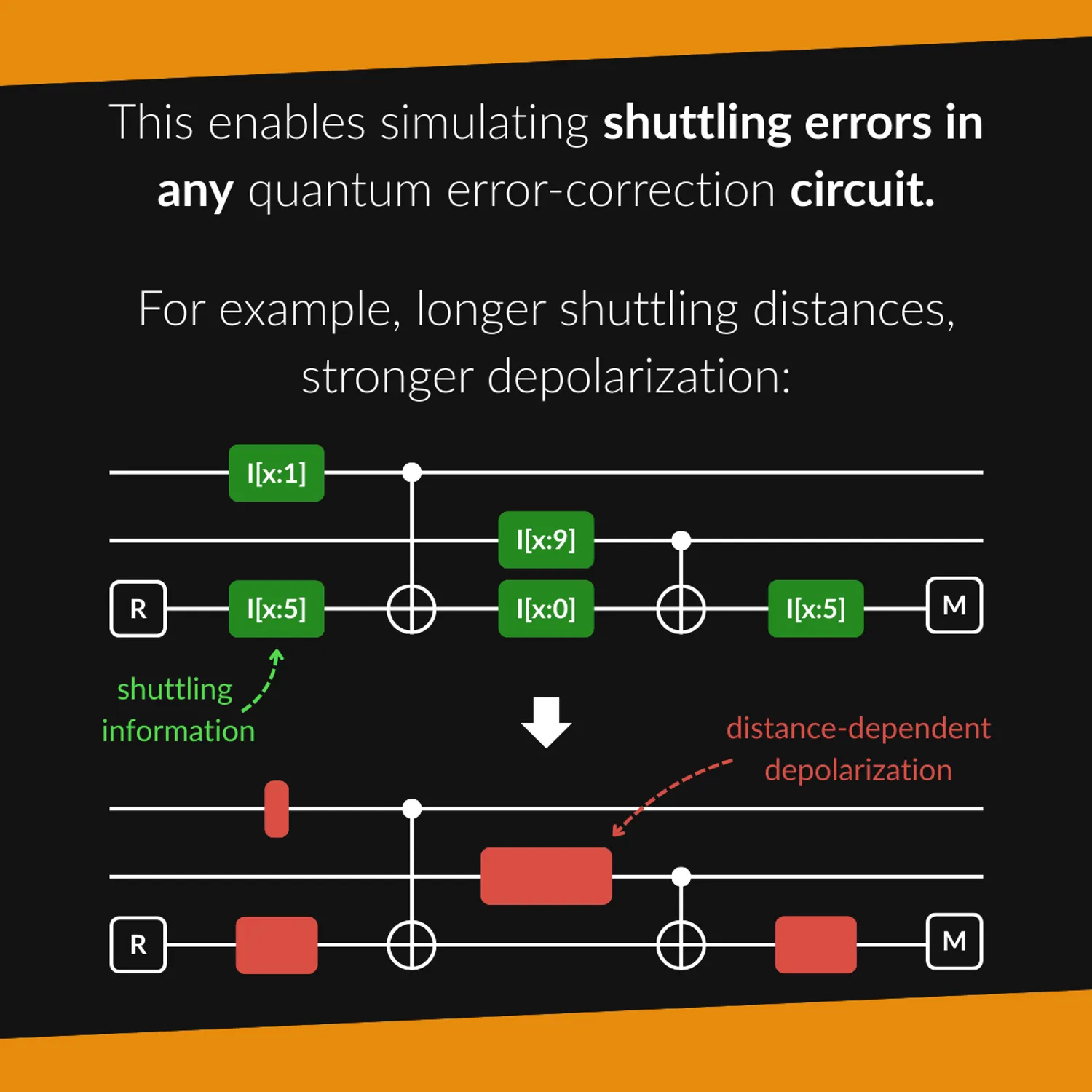
As qubits are moved, they are exposed to decoherence, increasing the likelihood of errors. For example, shuttling may induce depolarization at a rate proportional to the distance traveled, meaning longer shuttling operations lead to higher error rates.
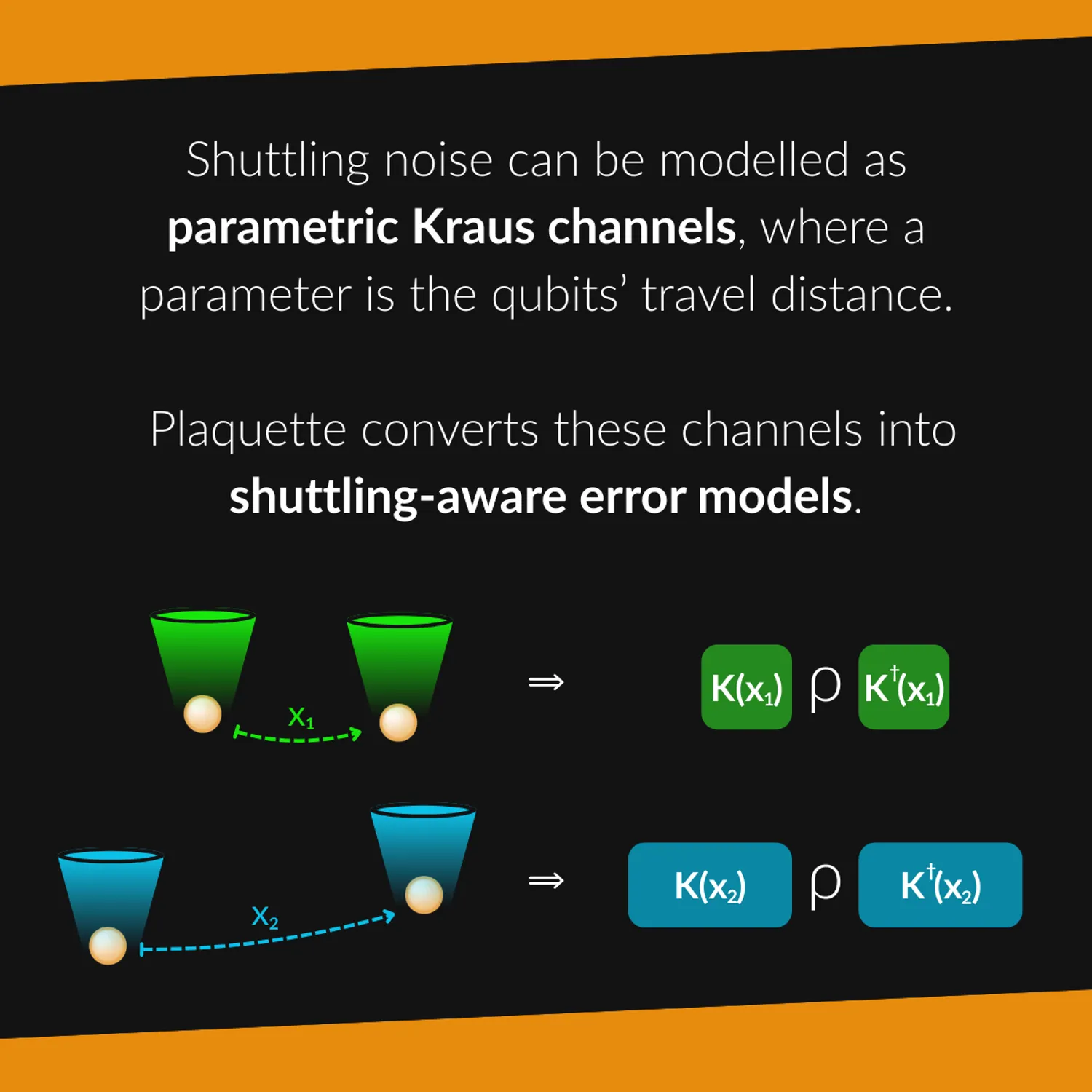
More generally, Plaquette uses circuit labels (such as shuttling distance) to power custom, device-specific error models. These error channels can be parametric and capture not only shuttling-induced noise, but also a broader class of decoherence processes that admit a Kraus representation.
To see some examples of other kinds of error models, or to learn about what else you need to study the effect of errors in a quantum circuit, check out our article on how Plaquette works in practice.
If you’d like to do a deeper dive into how Plaquette works for your own platform, get in touch and we can share a demo.
Not ready yet? You can also join our practitioners mailing list to be notified when we release new features or publish technical content like this.