
Many top quantum computing hardware teams are building logical qubits. To understand what makes logical qubits so important in quantum computing, let’s take a look at some applications where quantum computers are expected to really shine.
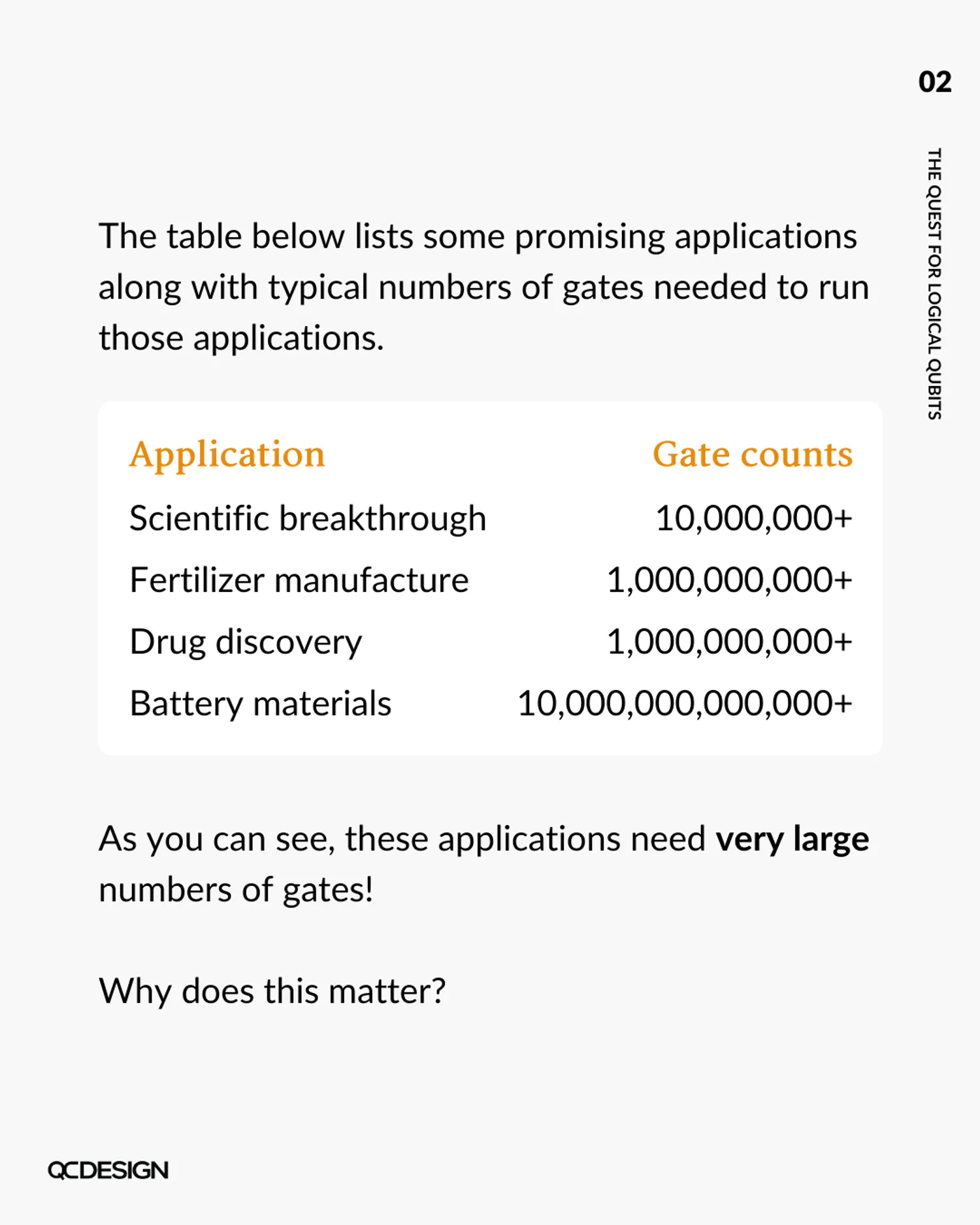
The table below lists some promising applications along with typical numbers of gates needed to run those applications.
| Application | Gate counts |
|---|---|
| Scientific breakthrough | 10,000,000+ |
| Fertilizer manufacture | 1,000,000,000+ |
| Drug discovery | 1,000,000,000+ |
| Battery materials | 10,000,000,000,000+ |
As you can see, these applications need very large numbers of gates!
Why does this matter?
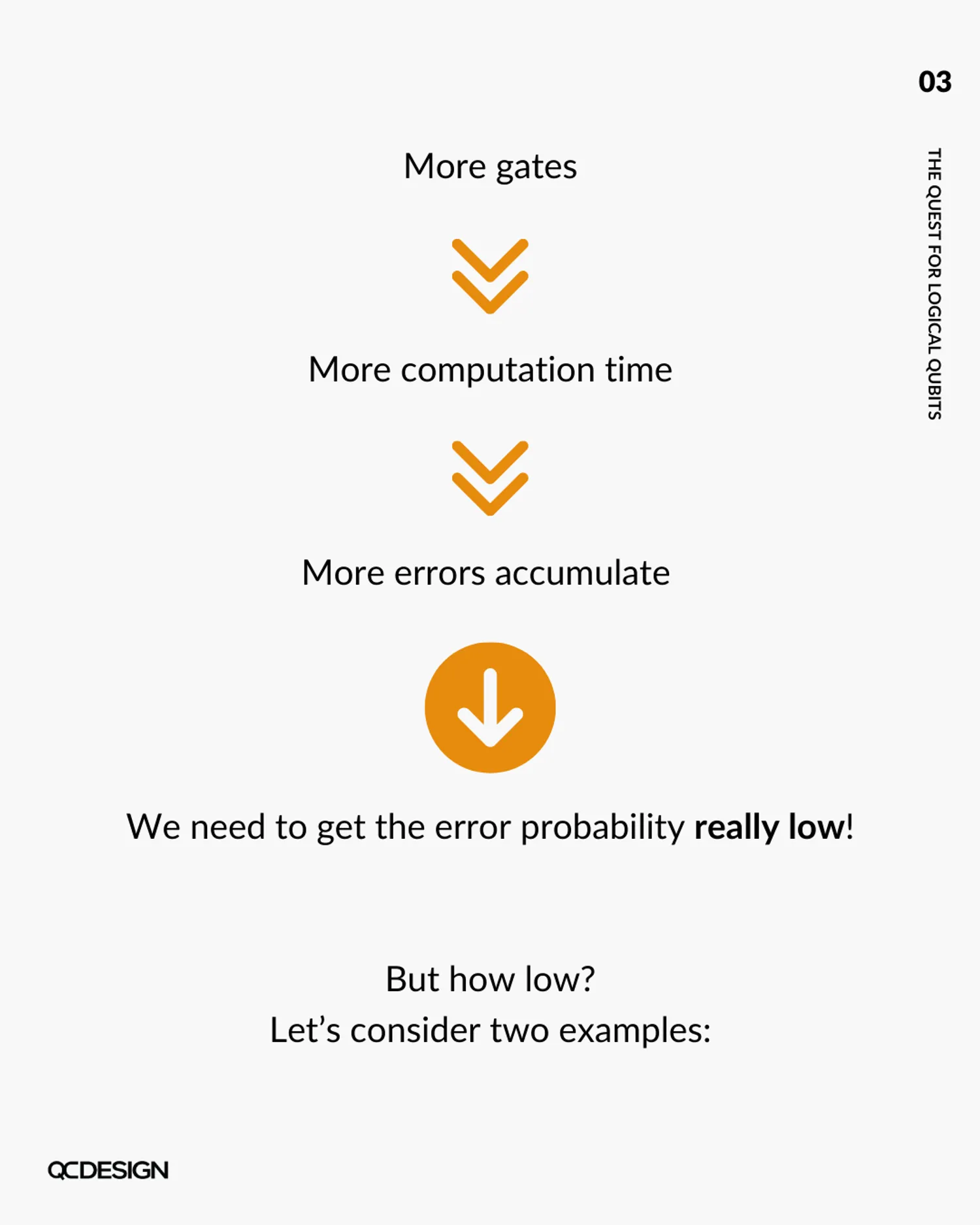
As we add more gates to a quantum circuit, we increase the total computation time. The longer the computation runs, the more opportunities there are for errors to occur and accumulate.

To make sure that errors don’t overwhelm the computation as it grows, we need to get the error rate low enough.
But how low is low enough?
To make that concrete, let’s look at two examples with two different error rates.
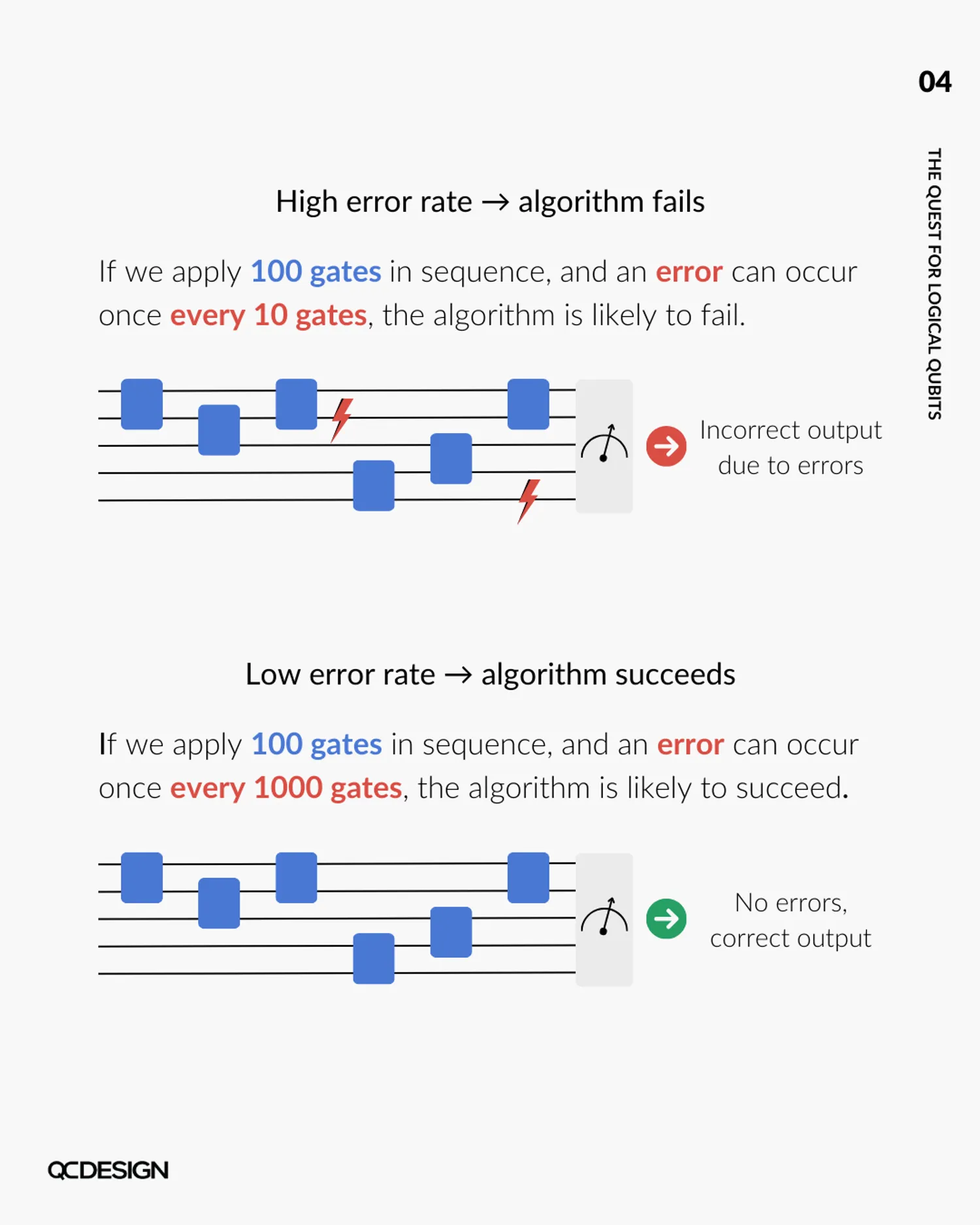
Suppose we run a circuit with 100 gates applied one after another. If the hardware error rate is such that, on average, an error occurs once every 10 gates, then errors are likely to appear multiple times during the computation. In that regime, the final output is unlikely to be reliable due to errors that accumulated along the way.
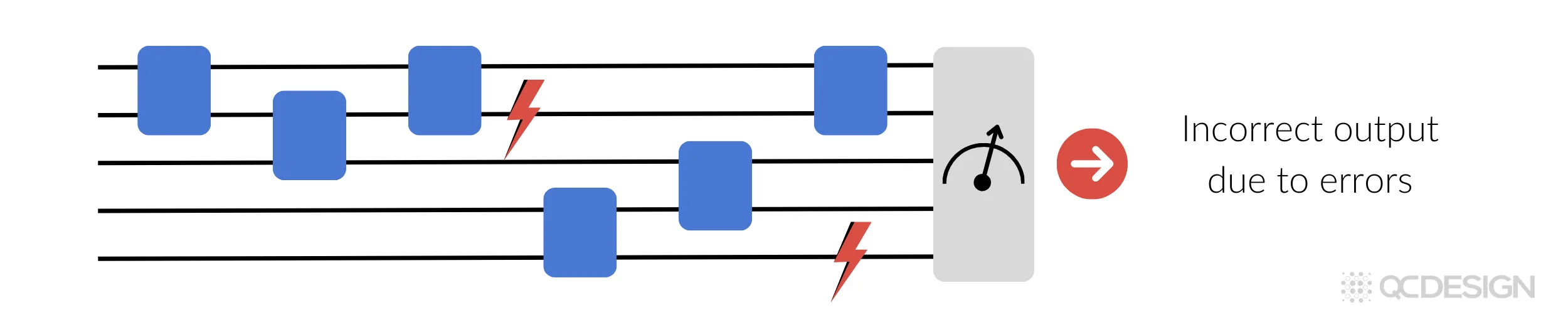
Now consider the same 100-gate circuit, but with a much lower error rate, say, one error every 1000 gates on average. In this case, the probability that an error occurs during the 100-gate computation is much smaller. The circuit is far more likely to run cleanly, and the algorithm produces the correct result.

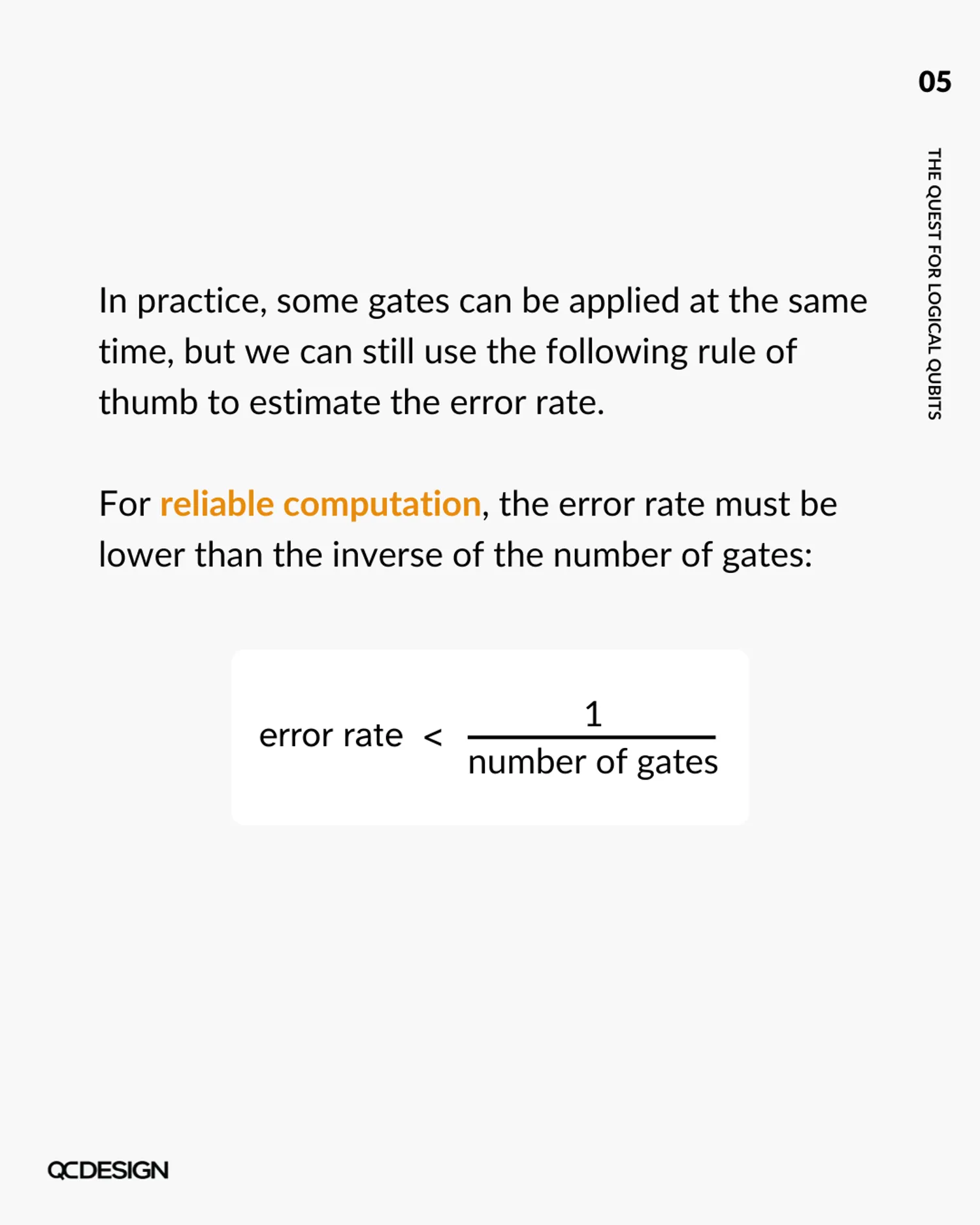
Even though, in practice, some gates can be applied at the same time, we can still use the following rule of thumb to estimate the error rate.
For reliable computation, the error rate must be lower than the inverse of the number of gates:
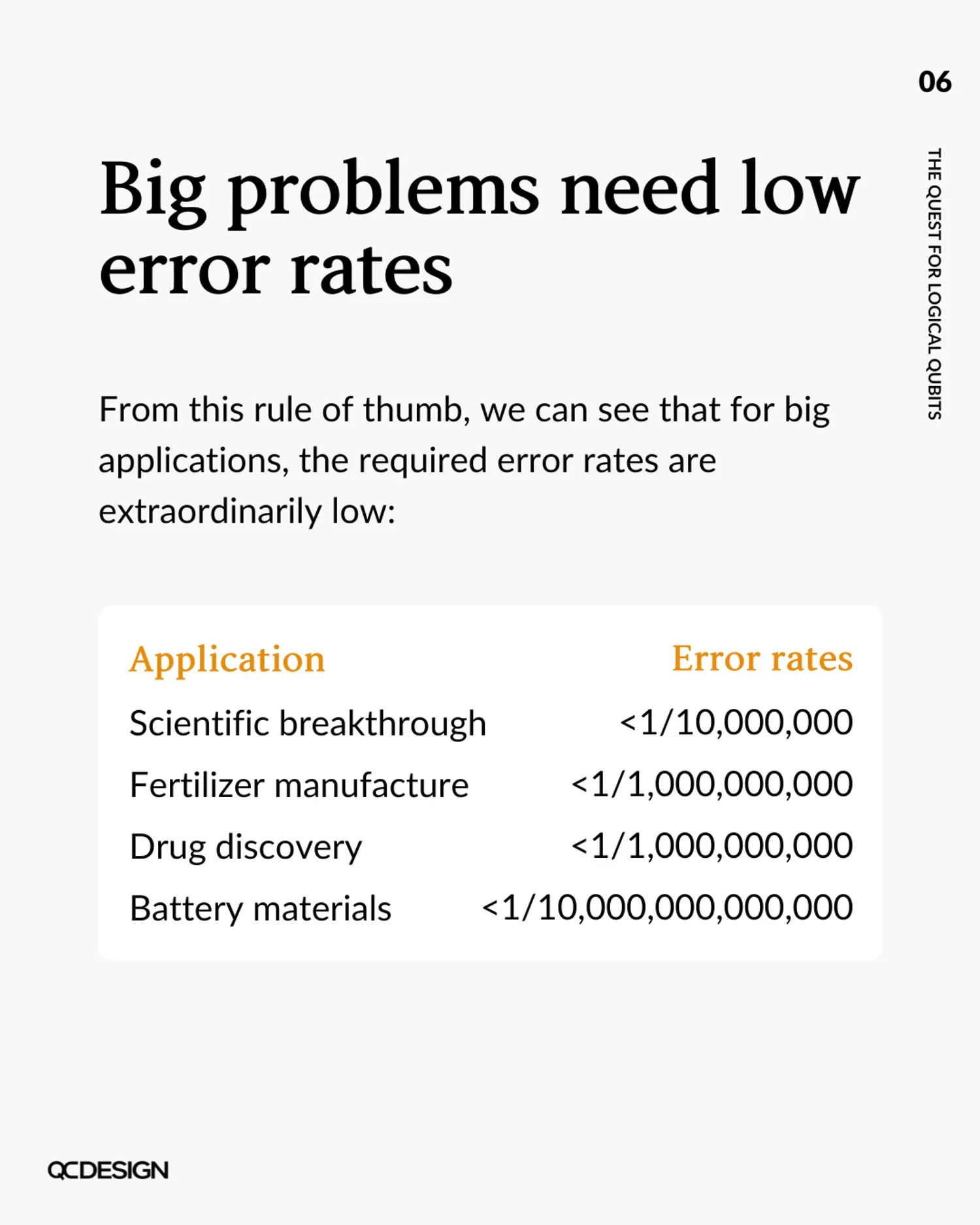
From this rule of thumb, we can see that for big applications, the required error rates are extraordinarily low:
| Application | Error rates |
|---|---|
| Scientific breakthrough | < 1 / 10,000,000 |
| Fertilizer manufacture | < 1 / 1,000,000,000 |
| Drug discovery | < 1 / 1,000,000,000 |
| Battery materials | < 1 / 10,000,000,000,000 |
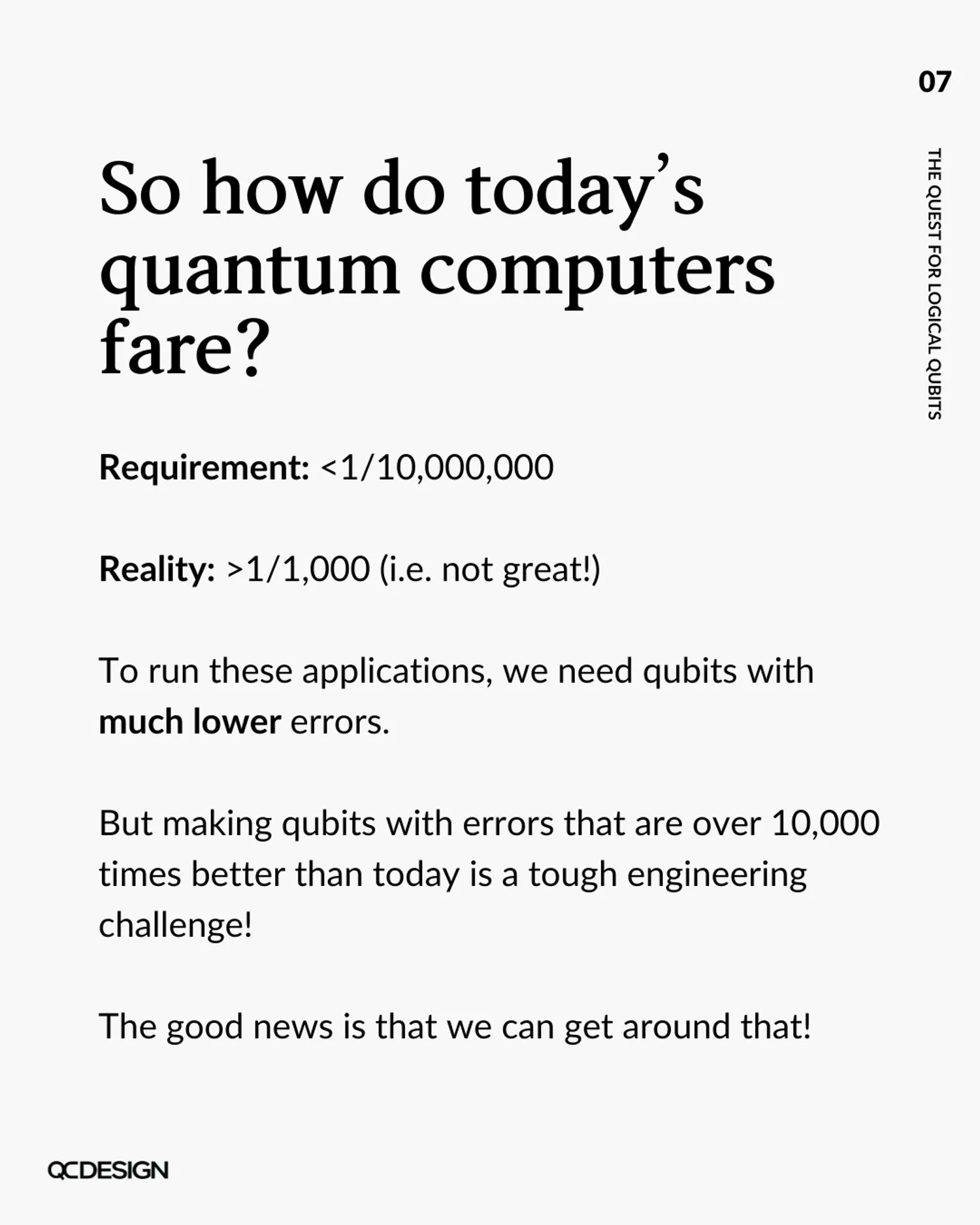
So how do today’s quantum computers compare to what these applications require?
For many large-scale algorithms, the effective error rate per gate needs to be below about one in ten million. That’s the regime where long computations can run without being overwhelmed by accumulated noise.
In reality, current physical qubits have error rates closer to one in a thousand. That gap is significant. At those error levels, the kinds of long circuits required for useful applications are simply not reliable.
To run these algorithms, we need qubits with much lower effective error rates. Achieving a 10,000-fold improvement in the physical hardware alone is an enormous engineering challenge.
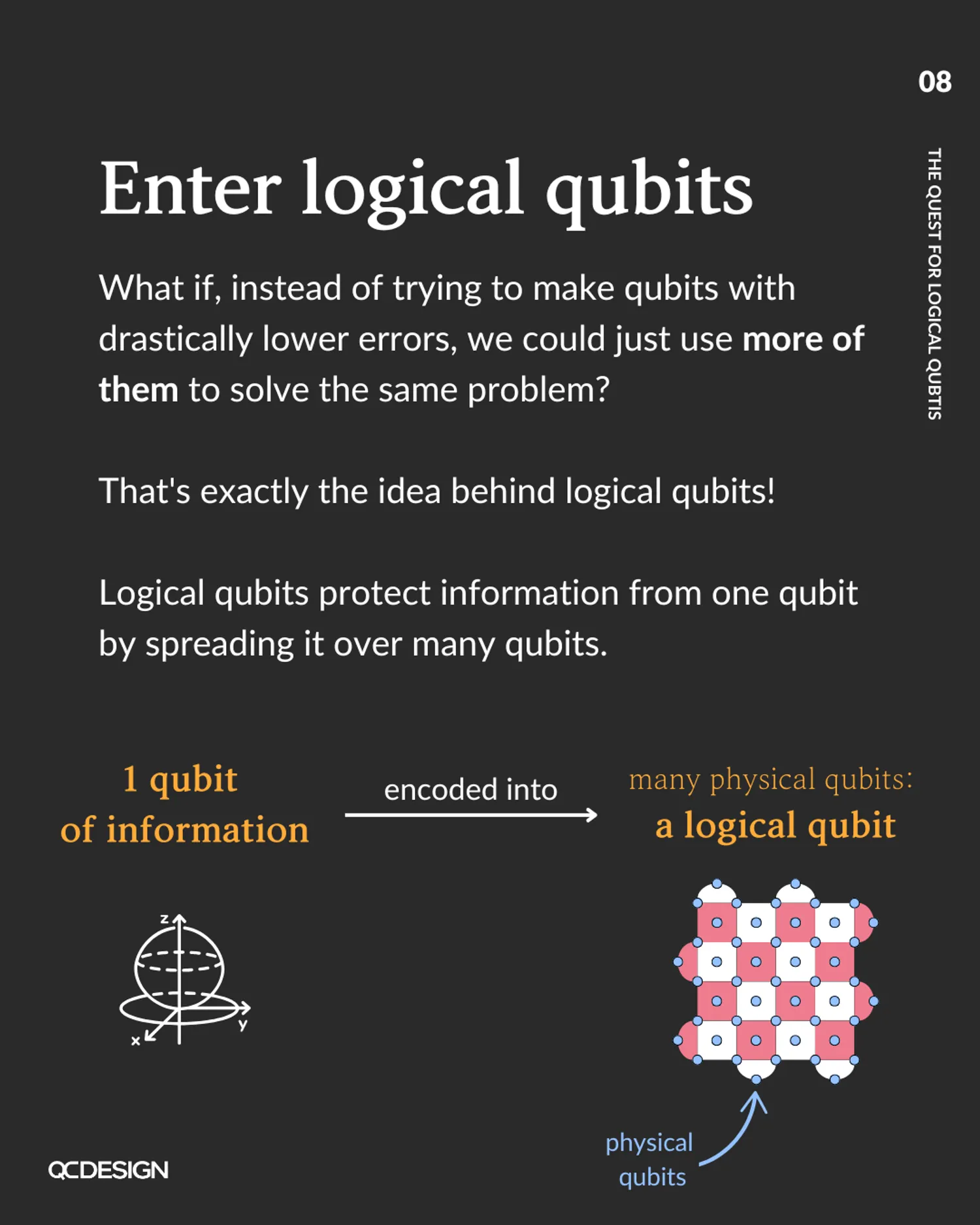
The good news is that we don’t have to rely on hardware improvements alone. There’s another way to reach the required error levels. What if, instead of trying to make qubits with drastically lower errors, we could just use more of them to solve the same problem?
That’s exactly the idea behind logical qubits
Logical qubits protect information from one qubit by spreading it over many qubits. They are what make deep circuits possible.
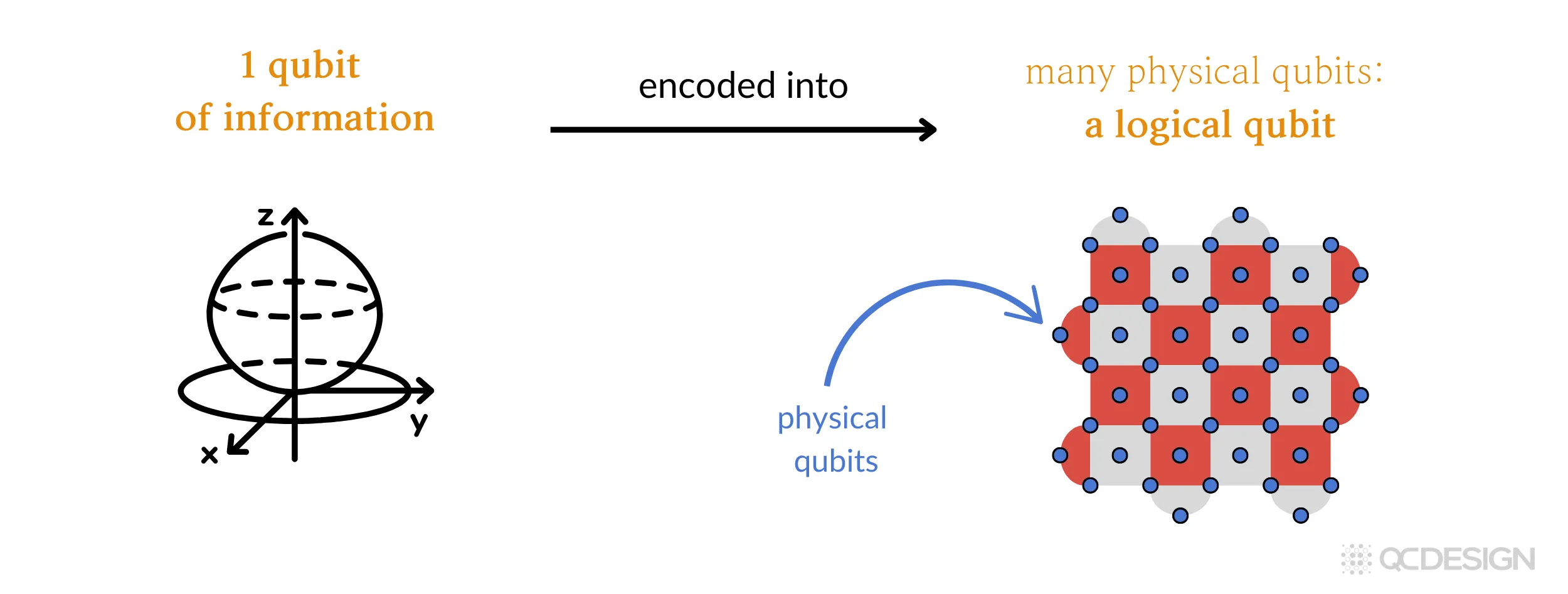
Using logical qubits composed of thousands of physical qubits keeps the overall error levels low, enabling the realization of big circuits with billions of logical gates or more.
That’s exactly what’s needed for building reliable and useful quantum computers. Which is why many quantum hardware teams are focused on developing logical qubits.
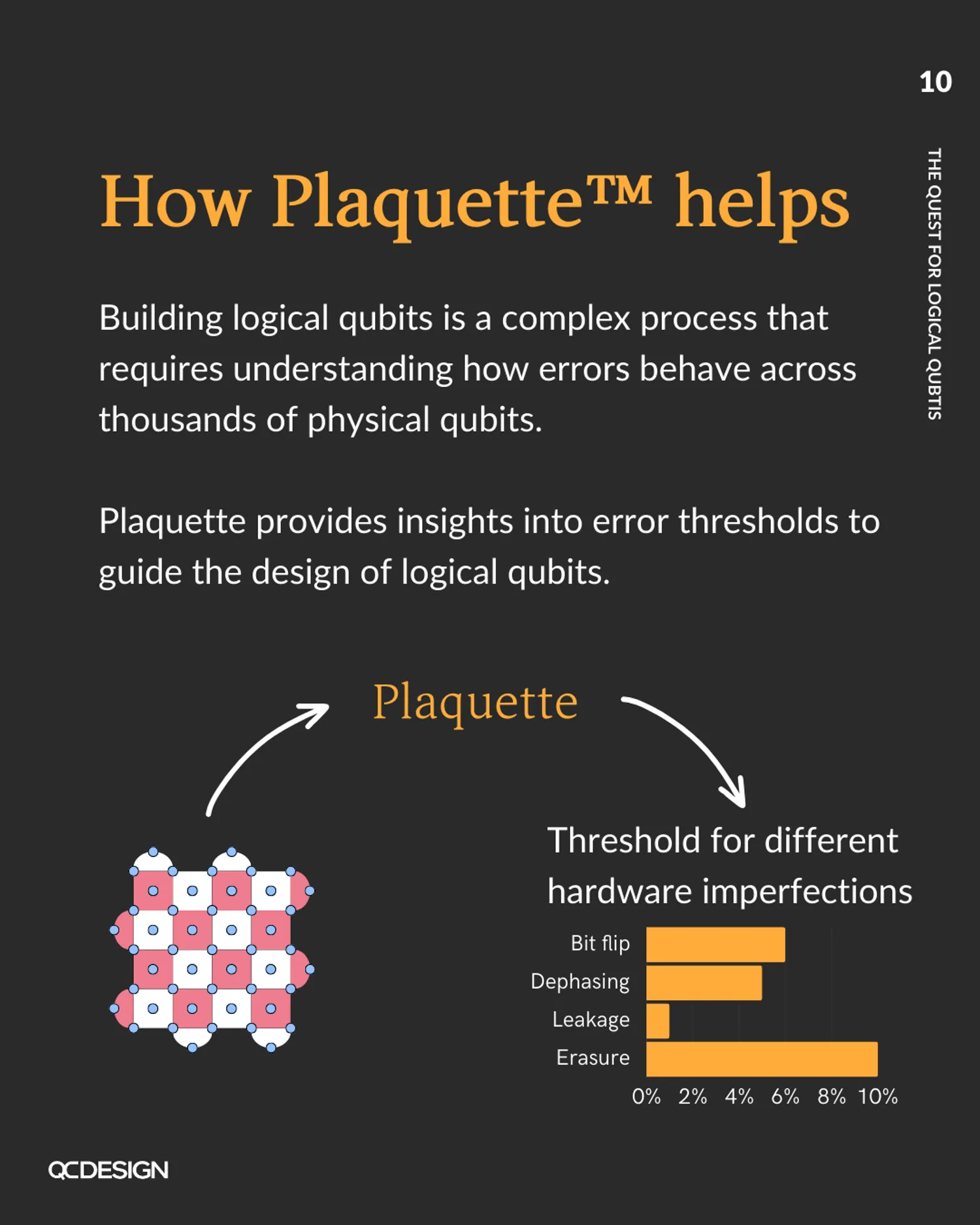
How Plaquette helps
Building logical qubits is a complex process that requires understanding how errors behave across thousands of physical qubits.
Plaquette provides insights into error probabilities to guide the design of logical qubits.
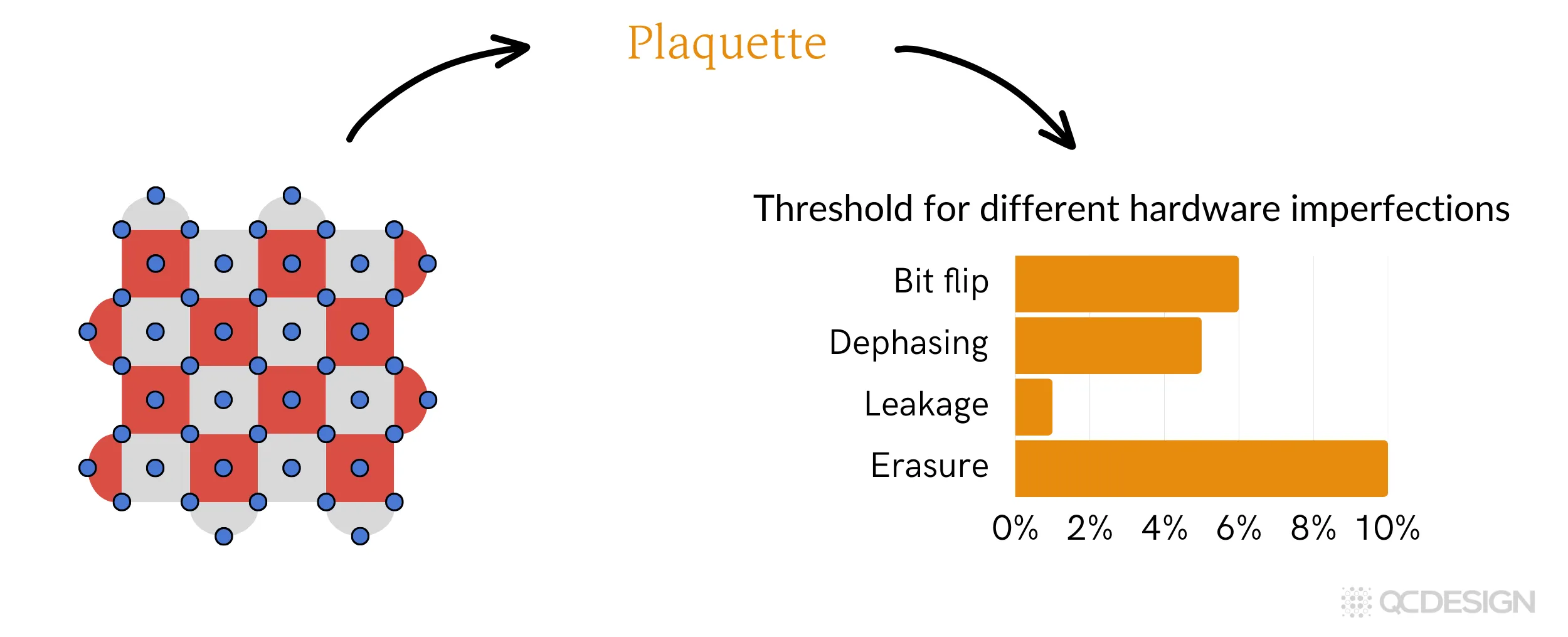
If you’re curious how Plaquette can work for your platform, get in touch and we can share a demo.
Not ready yet? You can also join our practitioners mailing list to be notified when we release new features or publish technical content like this.

This post was originally published in January 2025 and updated in March 2026.
This educational series is supported by the European Union’s EIC Accelerator programme.